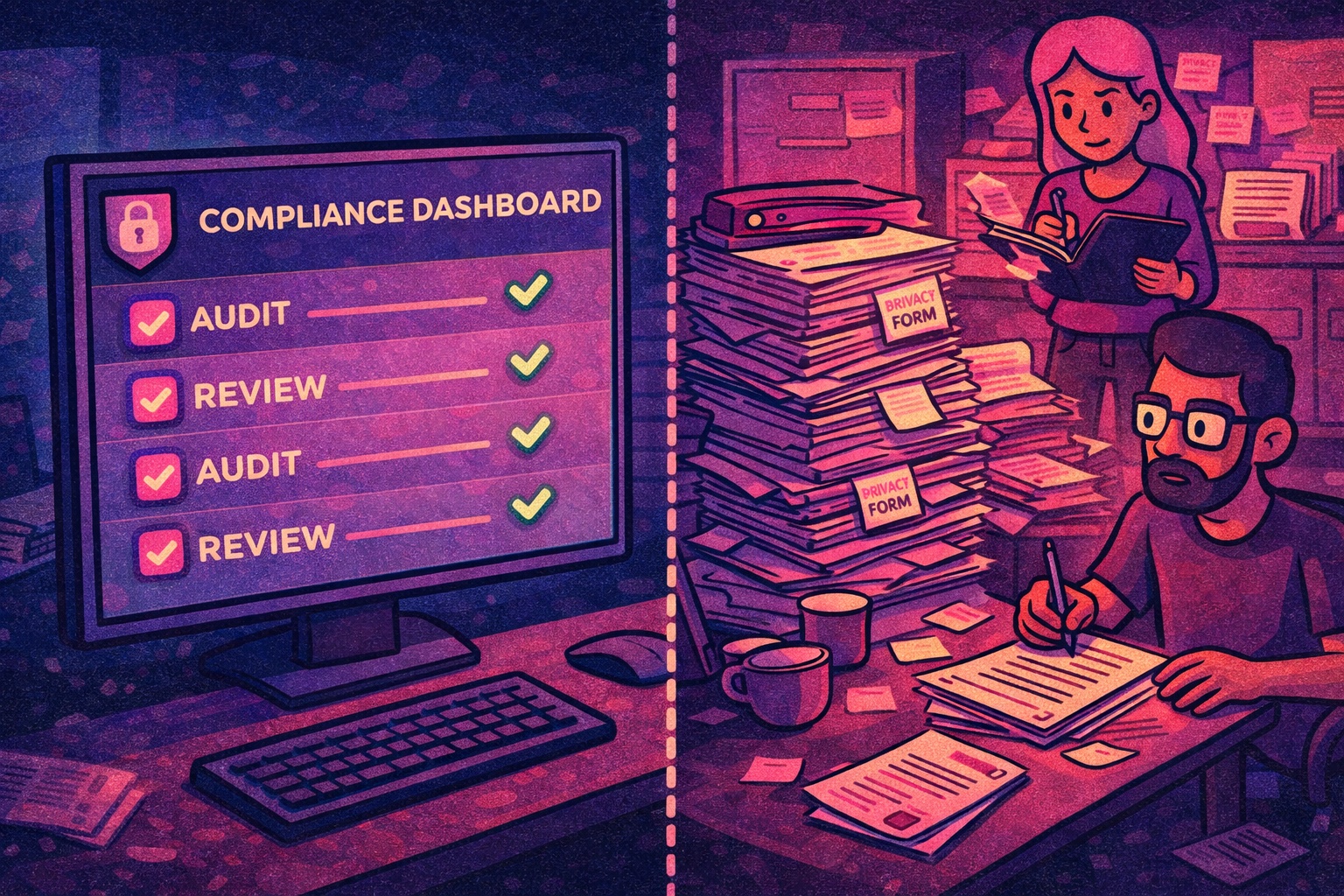
Companies are increasingly relying on security evidence collection platforms for their SOC 2, ISO 27001, or GDPR compliance programs, assuming that if the tool says they're compliant, they must be covered. The reality is quite different, particularly for privacy.
These platforms are excellent at what they do: collecting digital evidence, tracking policies, monitoring systems, and creating audit trails. They'll plug into your cloud infrastructure, pull logs from your applications, and generate reports that auditors love to see. But here's the catch: they only see what's digital.
The Blind Spots
One of the biggest gaps I encounter when reviewing these implementations is the complete absence of manual processes. Your evidence tool might be capturing every API call and system log, but what about the paper forms your sales team fills out at events? Or the manual data entry process your support team uses for customer requests that come in via phone? These activities involve personal information, and they're nowhere in your compliance dashboard.
For GDPR, this creates a serious problem. The regulation requires you to maintain Records of Processing Activities (RoPAs). These aren't just nice-to-haves or checkbox items. They're detailed inventories of every way you process personal information, including the purposes, categories of data, retention periods, and transfers. Your evidence tool might have a field where you upload "your RoPA," but it's not actually helping you create or maintain one that meets the regulatory requirements.
The format and content of RoPAs differ significantly depending on whether you're processing data as a controller or processor, and whether you're in a business-to-business or business-to-consumer context. These nuances matter, and a generic checklist won't catch them.
The Human Element
A SaaS company I worked with had spent considerable money on a compliance platform and felt confident about their GDPR compliance. Their customer onboarding process involved a manual verification step their compliance tool knew nothing about. The personal information collected during this step wasn't documented anywhere in their digital records. When we looked at it, there was no record of processing activity, no retention schedule, and no documented legal basis.
This is where evidence tools fall short. They can't map your business processes for you. They can't tell you which manual activities involve personal information. They won't catch the spreadsheet your finance team maintains or the notes your customer success manager keeps in their notebook.
What You Should Do
If you're using an evidence collection platform for your security program, and many of them are genuinely good tools, don't treat it as your entire privacy program. Use it as a component, not the solution. You still need to:
- Map all your processing activities, including manual ones
- Create proper Records of Processing Activities that meet regulatory requirements
- Document processes that exist outside your digital infrastructure
- Have someone with privacy expertise review what the tool is actually capturing versus what it should be capturing
Think of your evidence tool as a very sophisticated digital filing cabinet. It's excellent at organising and presenting what you put into it, but it won't tell you what's missing from your filing system in the first place.
If you're concerned that your evidence tool might be giving you a false sense of security, or if you're not sure what gaps exist in your privacy program, reach out for a fresh review. Identifying the blind spots before a client assessment does is considerably less painful.