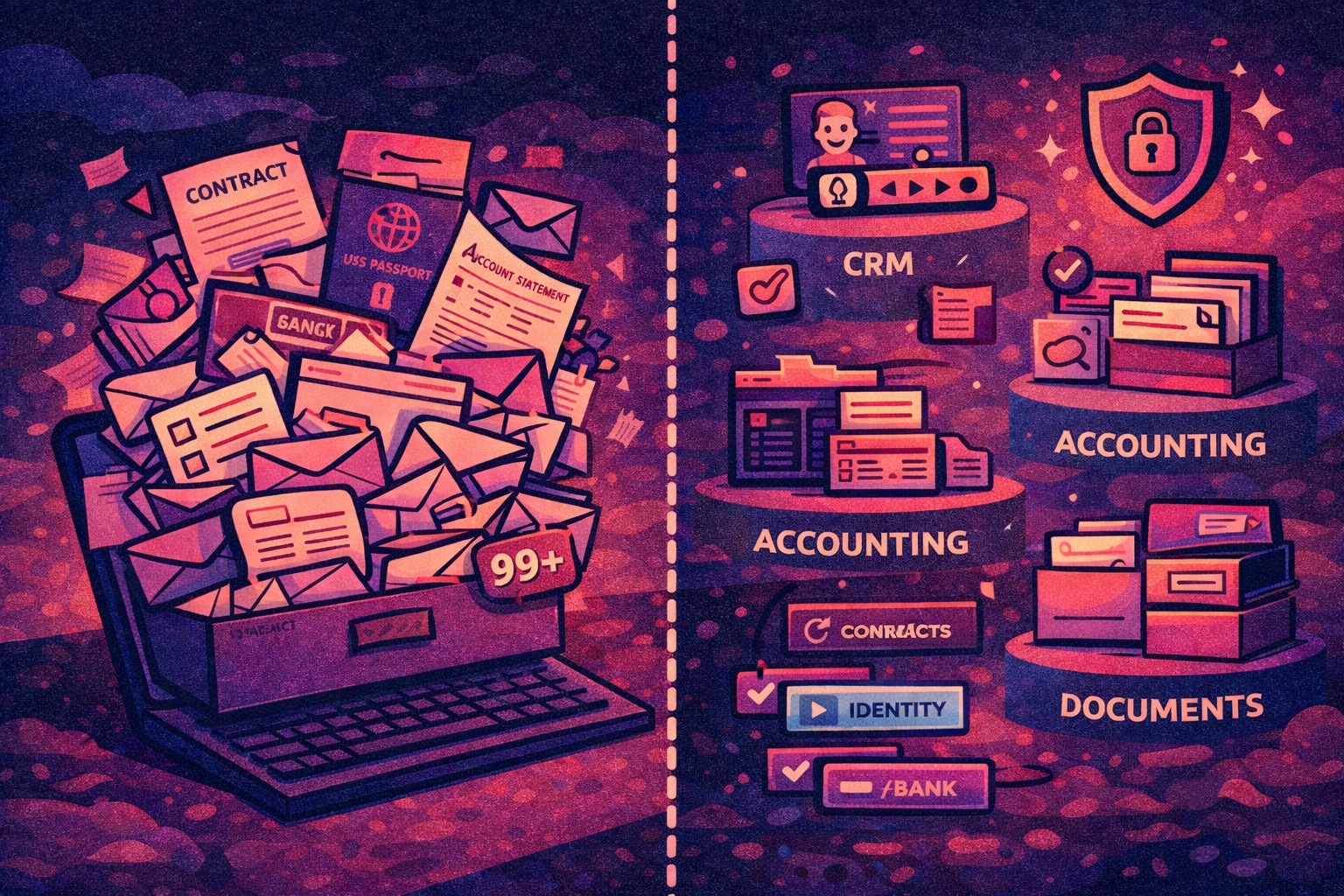
The Problem with Email as Storage
Most organisations keep email for the duration of someone's employment and then indefinitely thereafter, treating it as a precaution against future disputes or audit requests. The instinct is understandable. The practice is a compliance problem.
Inboxes accumulate sensitive personal data including bank statements, passport copies, government identification documents, and health information. When email becomes a storage system rather than a communication tool, managing this data appropriately becomes extremely difficult.
This creates compliance problems because privacy regulations require organisations to retain personal information only as long as necessary. An indefinite retention policy directly conflicts with these legal principles while simultaneously expanding vulnerability to data breaches. The more you hold, the more you're responsible for. The more you're responsible for, the more exposure you carry when something goes wrong.
The Solution: Treat Email as Transactional
The right approach treats email as its primary function suggests: a transactional communication method. Important documents should move to appropriate systems where proper retention policies can actually be applied:
- Contracts: Move to a CRM or signing platform with specific legal retention requirements
- Invoices and payment information: Transfer to accounting platforms
- Project documentation: Store in project management systems or document repositories
- Client data requiring processing: Extract and relocate to appropriate systems, then delete the email
- Support tickets: Keep in issue trackers, discard the original messages
Implementing proper retention policies becomes possible when documents exist in defined systems with their own retention rules, rather than mixed together in email archives where nothing has a defined end date.
Implementing Practical Retention
Retention policies should be deliberate and limited. Legitimate business needs like litigation holds and active projects justify temporary retention, and modern enterprise email systems provide classification tools that allow different categories to have appropriate retention periods.
A workable starting point: keep routine internal communications for approximately six months, while maintaining contract-related correspondence for longer periods, such as five years, to satisfy legal requirements. The specific periods will depend on your jurisdiction and industry, but the principle is the same: nothing should live in email indefinitely by default.
The Bottom Line
Treating email as transactional rather than archival significantly reduces privacy risk. It enables proper implementation of retention periods aligned with regulatory requirements and protects sensitive personal information appropriately. It also makes your breach response considerably simpler, because you're not trying to account for years of unclassified email when you need to understand what was in a compromised account.
If your email retention policy hasn't been reviewed recently, or if it doesn't exist at all, that's worth addressing. Reach out if you'd like to work through what a practical approach looks like for your organisation.